
Meet a Paleontologist
Unearth a Story
Saturday, July 18
2:00pm - 3:00pm
By examining animal and plant fossils, we can learn a lot about ancient life on Earth. This branch of science is known as paleontology. Paleontologists use fossils to learn about life forms of all different kinds, from the smallest of microorganisms all the way to the largest of prehistoric creatures, like the titanosaur! Join two graduate students to learn all about paleontology, what paleontologists do, and how the research is used.
About the presenters:
Mary Dickens is a graduate student at Georgia College & State University. Her research focuses on extinction trends in megaherbivore and megacarnivore species from the late Pleistocene (100,000 years ago to modern day). She uses the Neotoma Paleoecology Database to collect data and map out fossil localities from across the United States. She uses timing, depositional environment, and species to address the question: “Did human migration across North America from the Bering Strait lead to the extinction of late Pleistocene megafauna through hunting practices?”
Atticus Tomcho is a graduate student at the University of Georgia. His research uses isotopic analyses of the American alligator to study ancient habitat and coastline shifts in Georgia. He uses the stable isotopes of carbon, oxygen, and strontium to address the question: “How has coastal Georgia changed over the last 60,000 years through the lens of alligators?”
Event image credit: Евгений Харитонов from Getty Images via Canva.com
TAGS: | Science & Math | Guest Lecture |
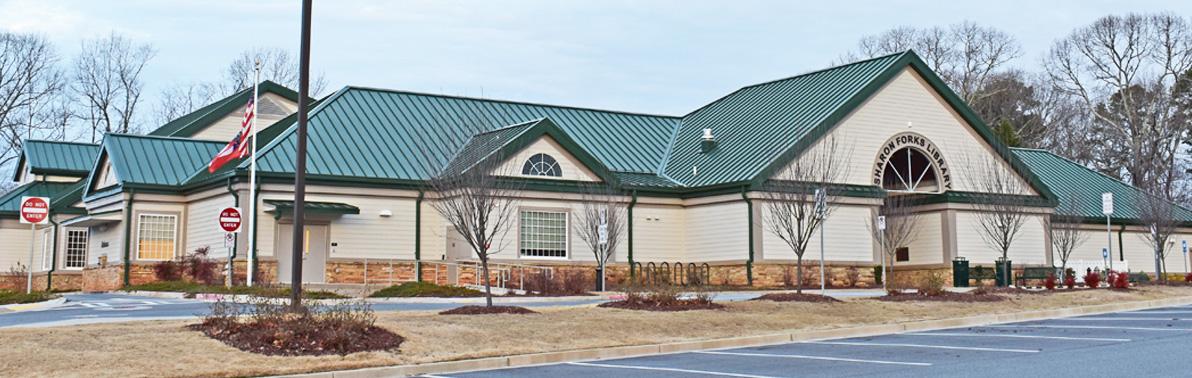
Sharon Forks Library
Main Library Telephone: 770-781-9840
Automated Telephone Renewals: 770-781-9865